How to benchmark hedge funds when cash yields matter again: set role-based hurdles, price liquidity, and judge value at the total-portfolio level.
8 min read | Mar 23, 2026
Short-dated cash is no longer a rounding error. The right question is not "what is the standard hedge fund benchmark?" — there isn't one. The right question is: what role does this sleeve play in the portfolio, and what hurdle proves it is doing that job after fees, liquidity costs, and implementation drag?
A benchmark is not a reporting detail. It tells you what job the allocation is supposed to do. If the benchmark is wrong, the conclusion will be wrong too. A low-beta relative value fund gets compared to equities and looks like a disappointment. A crowded equity long/short fund gets compared to cash and looks better than it is. A macro fund that exists to hedge regime shifts gets fired because it failed to beat T-bills in a quiet quarter.
More capital is flowing in — which makes benchmark discipline more important, not less. Crowded exposure is easiest to misread when the industry is in favor.
3-Month Treasury Bill Rate (%)
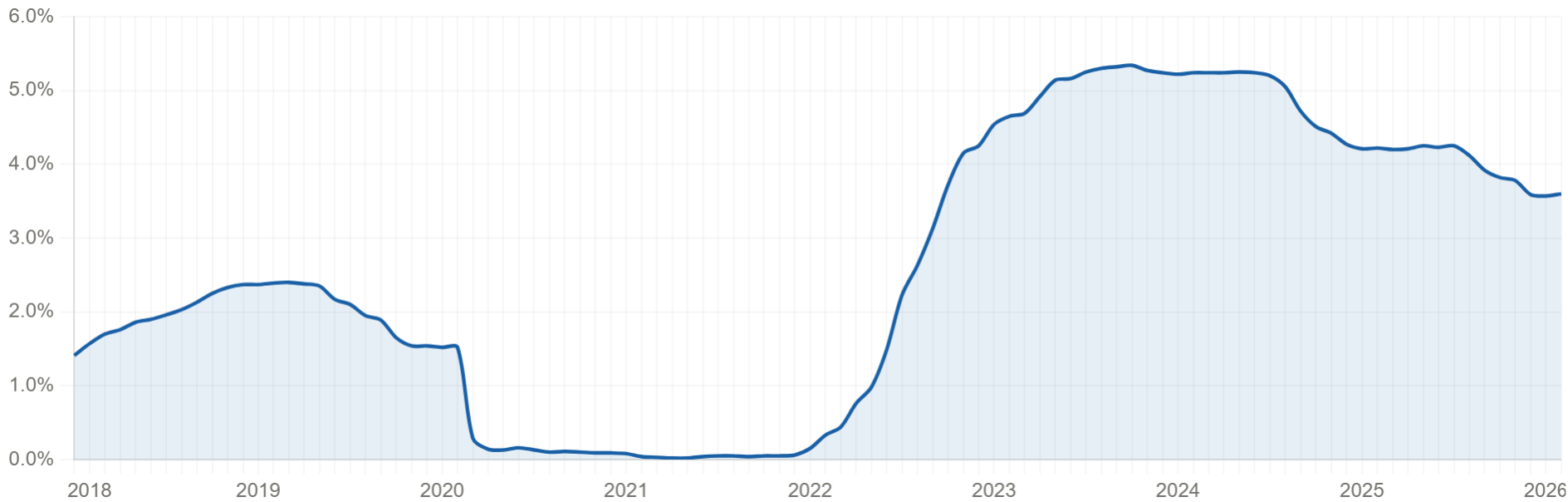
Source: Federal Reserve H.15 / FRED · Monthly averages, discount basis
Start With the Portfolio Job, Not the Strategy Label
Most hedge fund benchmarking starts from the manager's label. Equity long/short gets compared with an equity index. Macro gets compared with cash. Multi-strategy gets compared with a broad hedge fund index. That is neat, and often useless.
The backdrop makes this more consequential than it used to be. The 3-month Treasury bill rate moved above 5% in 2023 and remained elevated through much of 2024 and 2025 before easing more recently. BlackRock's Investment Institute argued in 2025 that some investors can now hold up to 5 percentage points more in hedge funds than before 2020 — and that sizing should be driven by liquidity, governance, and risk constraints rather than old asset-bucket conventions.
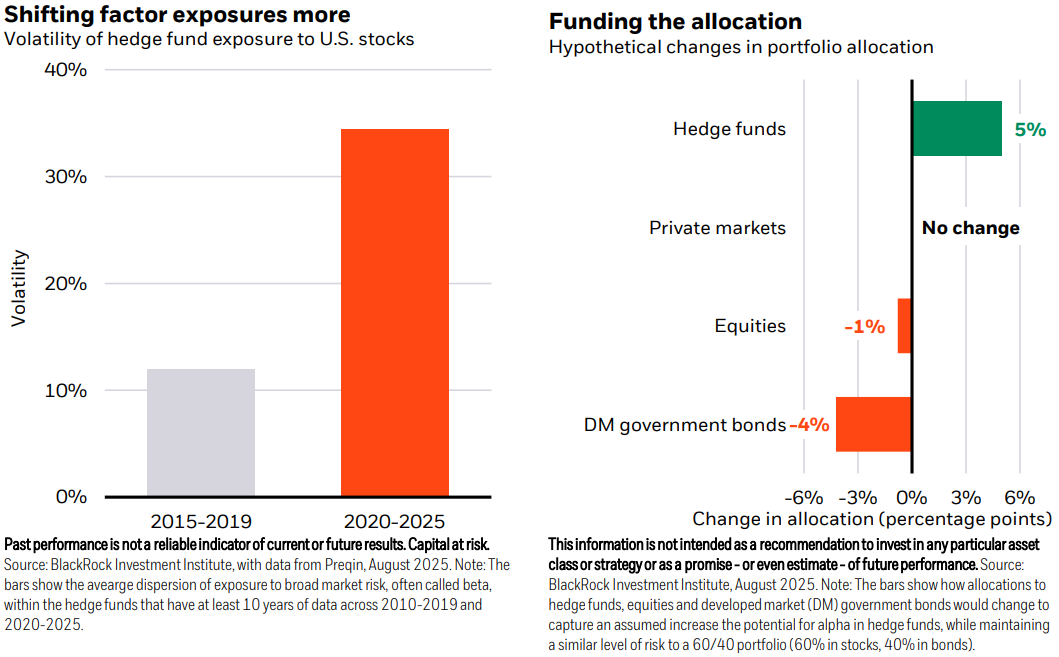
Source: BlackRock Investment Institute, "More Room for Hedge Funds"
HFR reported that net new capital in Q3 2025 reached the highest level since 2007, with year-to-date inflows of $71 billion.⁴ More capital flowing in makes getting the benchmark right more important, not less.
Hedge fund industry annual net asset flows (USD$bn)
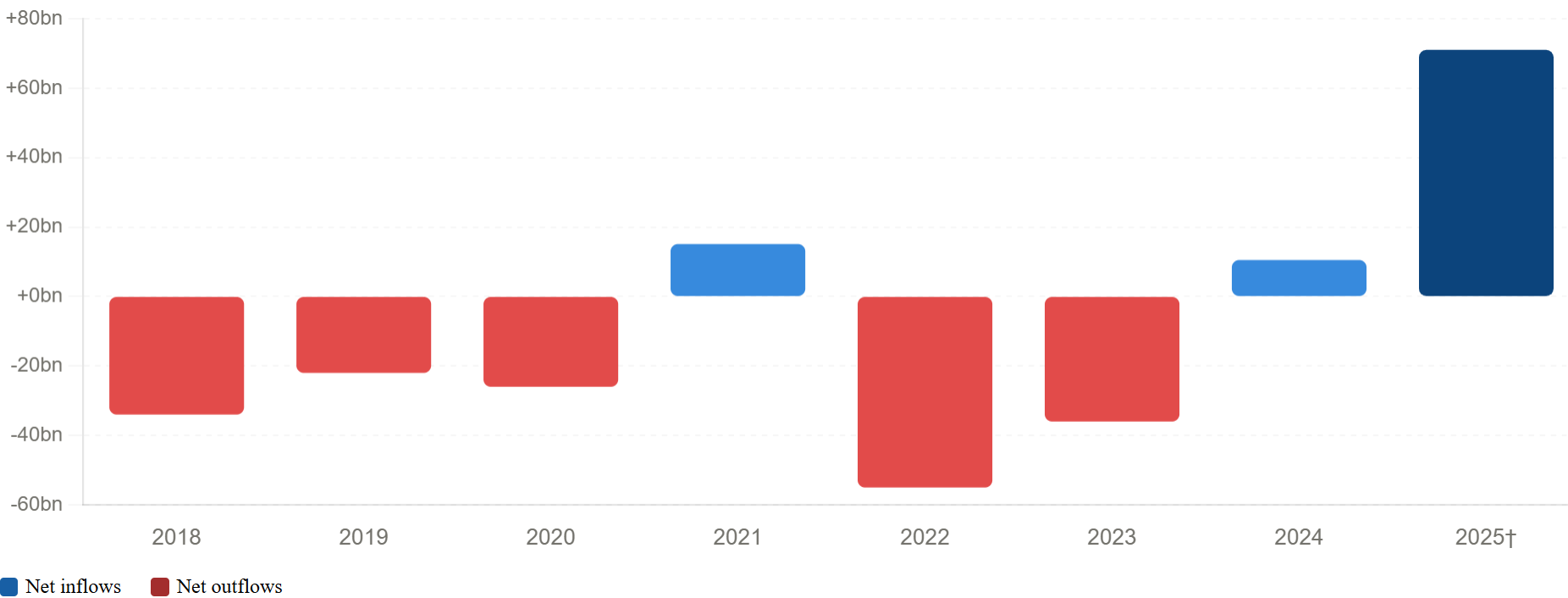
Source: HFR Global Hedge Fund Industry Reports · † 2025 = YTD through Q3
A benchmark should reflect the function of the allocation in the total portfolio. To do that well, it helps to classify hedge fund mandates into four distinct portfolio roles:
Return enhancer (equity long/short, event-driven equity, activist or concentrated hedge styles) The fund is meant to replace or complement public equity exposure. Cash is too soft a hurdle here. The question is whether it delivered a better drawdown-adjusted result than the equity risk it was supposed to displace.
Cash-plus diversifier (low-beta relative value, market neutral, merger arb, selected multi-strategy) The fund is meant to generate consistent excess returns over cash while keeping beta low and liquidity intact. The relevant question is not whether it beat global equities — it is whether it delivered enough net excess over cash while preserving the portfolio's flexibility.
Crisis diversifier (macro, managed futures, systematic trend) The fund exists to improve total-portfolio outcomes during dislocations. It should not be judged by whether it beat bills every quarter. It should be judged by whether it reduced drawdowns and provided genuine offset when equities and bonds were both under pressure.
Opportunistic alpha sleeve (unconstrained mandates) The portfolio role is loosest here, which means benchmark discipline matters most. Without a clear function, these allocations are the easiest to misread and the hardest to defend.
Once the role is clear, the hurdle becomes far more precise.
Build the Hurdle in Layers
The most common mistake is to use one benchmark number and stop there.
Layer one: cash as the floor
Did the fund beat a liquid alternative the allocator could actually own? In a cash-positive regime, this is not a trivial test. It is also not sufficient on its own — cash is the floor, not the full answer. A fund that just clears the cash hurdle needs to be delivering something else: diversification, convexity, or access the portfolio cannot replicate more cheaply.
Layer two: role-specific hurdle
For a cash-plus diversifier: how much did the fund beat cash by, net of fees? What was the beta to core public markets? What was the maximum drawdown and recovery speed? Did liquidity hold when the rest of the book needed it?
For a return enhancer: what public equity exposure was the sleeve supposed to displace? Did the fund deliver a better return path after adjusting for beta? Was the alpha real, or was it diluted equity beta with an extra layer of fees?
For a crisis diversifier: did the sleeve help when both equities and bonds were under pressure? How did it behave in sustained drawdowns versus short corrections? Did it actually offset losses at the total-fund level, or was it too small to matter?
Layer three: total portfolio impact
This is the only layer that ultimately matters. J.P. Morgan's long-term capital market assumptions make the point directly: in a world of higher rates and more volatile macro conditions, alternatives can improve portfolio efficiency — but only if they add something genuinely distinct.⁵ Higher cash rates also raise the burden on allocators to separate genuine alpha from simple carry.
Every hedge fund sleeve should be judged on five things: excess return over cash; marginal effect on portfolio Sharpe; impact on maximum drawdown; contribution to liquidity management; and whether it duplicated risk already owned elsewhere. If the sleeve does not improve at least one of those, the capital should be recycled.
What Goes Wrong in Practice
Benchmark softness. "Cash plus 300" is a universal hurdle because it is simple. It is also lazy. A merger arb fund, a macro fund, and an equity long/short fund should not clear the same test.
Index hugging through benchmark choice. If an equity hedge fund is compared to cash, mediocre beta looks like skill. If it is compared to a global equity index without adjusting for beta, genuine downside protection can look like underperformance. Both errors are common, and both serve the manager more than the allocator.
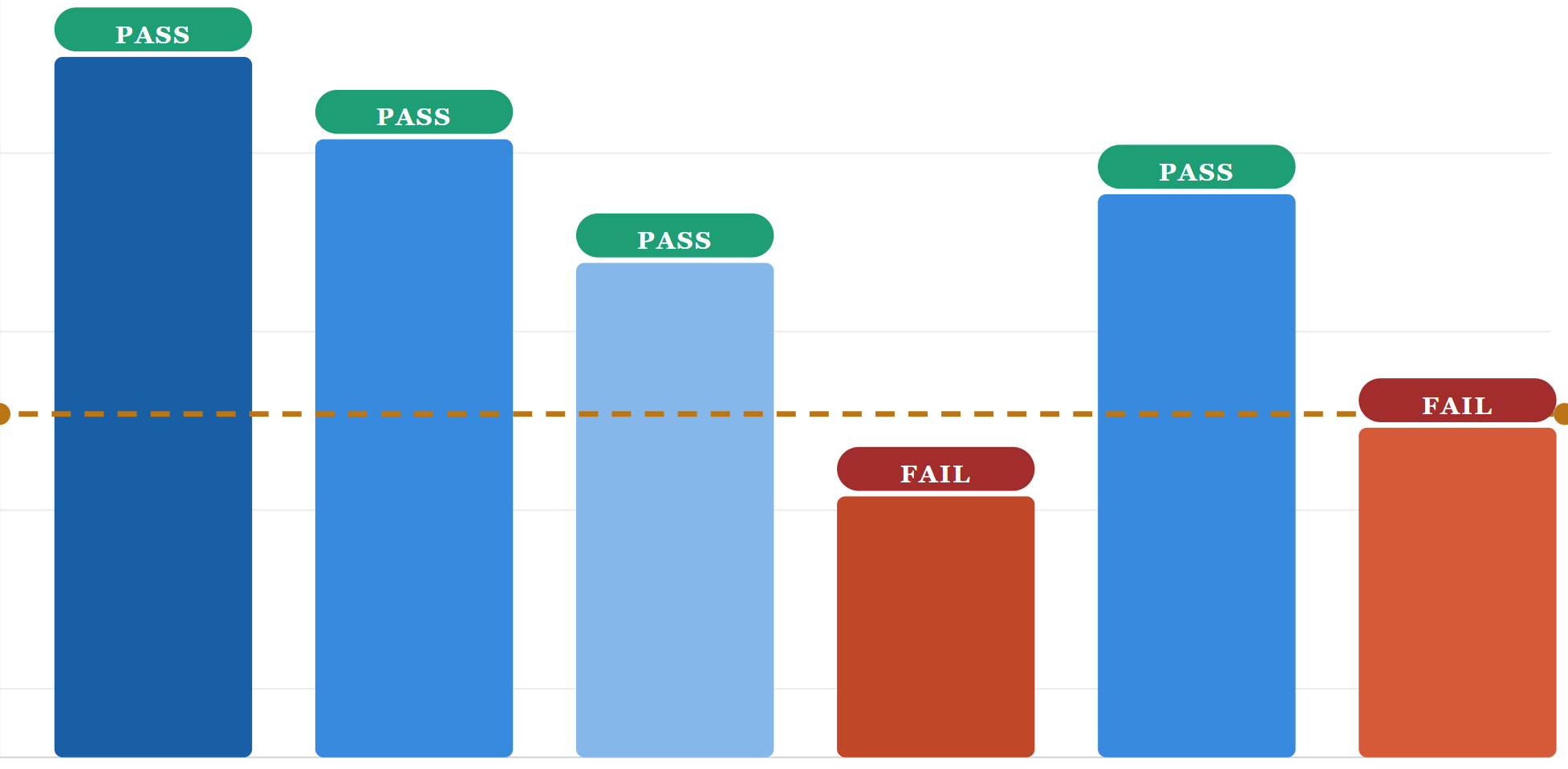
How benchmark choice distorts the verdict — same fund, three different tests
|
Benchmark used |
Benchmark return |
Excess return |
Beta adjusted? |
Drawdown vs. bench |
Verdict |
|---|---|---|---|---|---|
|
Cash (T-bill) |
5.0% |
+1.2% |
No |
Better |
Pass |
|
MSCI ACWI (equity) |
14.3% |
−8.1% |
No |
Better |
Fail |
|
Beta-adj. equity |
5.0% + 0.35×9.3% |
+0.0% |
Yes |
Much better |
Neutral |
|
Role-based hurdle |
Cash + portfolio test |
+1.2% net |
Yes |
Much better |
Pass |
Source: Resonanz Capital; Hypothetical illustrative example · Net return 6.2%, beta 0.35, max drawdown −4.1%; The same fund passes or fails depending entirely on which benchmark is applied.
Ignoring implementation drag. A benchmark that stops at gross return is incomplete. Fees, pass-throughs, gates, tax drag, and liquidity terms all matter. Two funds with the same net return can have very different value to the allocator if one is monthly liquid and the other can gate capital.
Forgetting opportunity cost. A hedge fund competes not just with its strategy peers but with the capital's best alternative use — which in recent years has often been cash, short-duration fixed income, or lower-fee passive exposures.
Under-sizing a role and calling it ineffective. A crisis diversifier that represents 1% of total assets may be intellectually justified and practically irrelevant. If the role is portfolio insurance, size it to move outcomes.
What to Watch Now
The cash hurdle will shift as short rates move. That does not mean reverting to loose benchmarking — it means recalibrating the floor while keeping the role-based structure intact.
Watch for beta disguised as alpha. In a strong public market environment, many funds will clear cash with ease. The question is whether they are earning hedge fund fees for exposures that could have been owned more cheaply.
Watch liquidity terms. As hedge fund demand rises, some managers regain pricing power on gates, lockups, and pass-throughs. A benchmark that ignores these is incomplete.
Watch replacement value. If an allocator is using hedge funds in place of developed-market sovereigns — as BlackRock explicitly suggested for some investors — the benchmark should reflect that capital decision.² A macro or market-neutral fund that beats cash but fails to improve the portfolio relative to what it displaced is not a success.
The Bottom Line
Benchmark by function, not label. Cash-plus diversifier, return enhancer, and crisis diversifier are different mandates and need different tests. Judge at the portfolio level — if the sleeve does not improve drawdowns, Sharpe, liquidity profile, or diversification, it is not earning its place. Size roles to matter. And reassess as rates move.
The benchmark is the clearest expression of what you believe the allocation is there to do. With more capital flowing into hedge funds and more pressure on every basis point, getting that right has rarely mattered more.
Resonanz insights in your inbox...
Get the research behind strategies most professional allocators trust, but almost no-one explains.